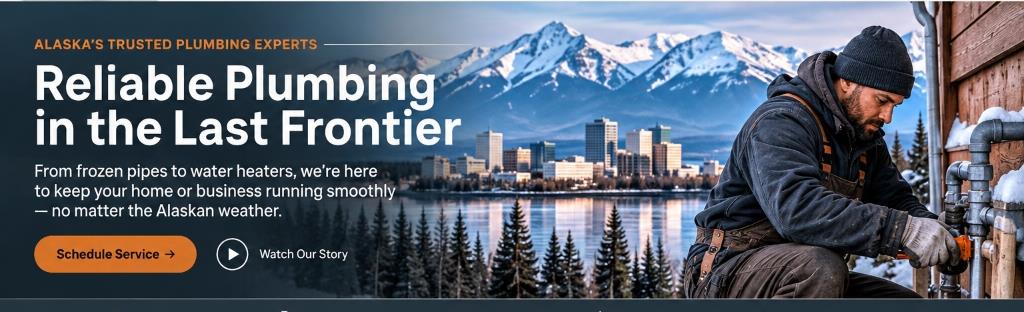
ALASKA'S TRUSTED PLUMBING EXPERTS
Reliable Plumbing
in the Last Frontier
From frozen pipes to water heaters, we're here to keep your home or business running smoothly — no matter the Alaskan weather.
From frozen pipes to water heaters, we're here to keep your home or business running smoothly — no matter the Alaskan weather.
Built specifically for sub-zero weather, deep frost penetration, and private well water systems across Alaska.
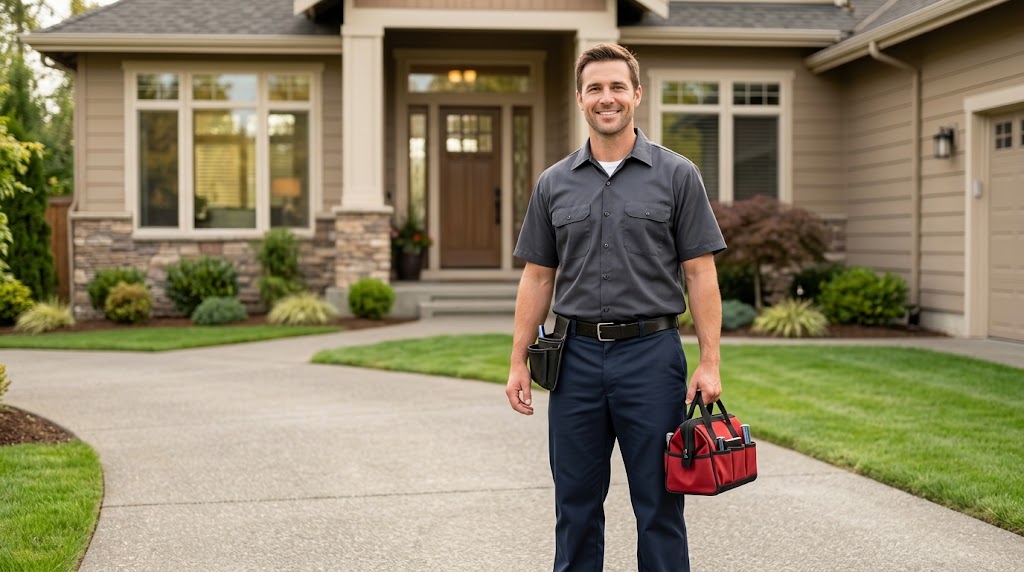
Rapid thawing of frozen supply lines and sewer drains using safe, non-invasive electrical and steam equipment. Complete pipe replacement if bursting has already occurred.
Learn More →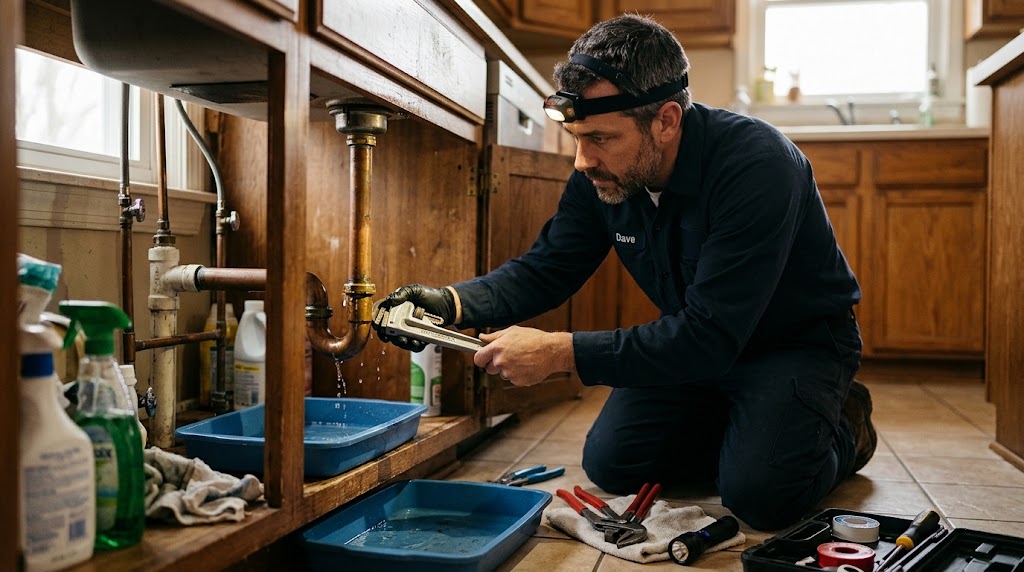
Restoring hot water in frigid temperatures. Repair and replacement of high-efficiency gas, electric, and tankless on-demand water heaters sized for arctic incoming groundwater.
Learn More →
Clearing tough kitchen grease, laundry blockages, and main building sewer backups. Video camera pipe inspection pinpoints root intrusion, sag, and ice dams.
Learn More →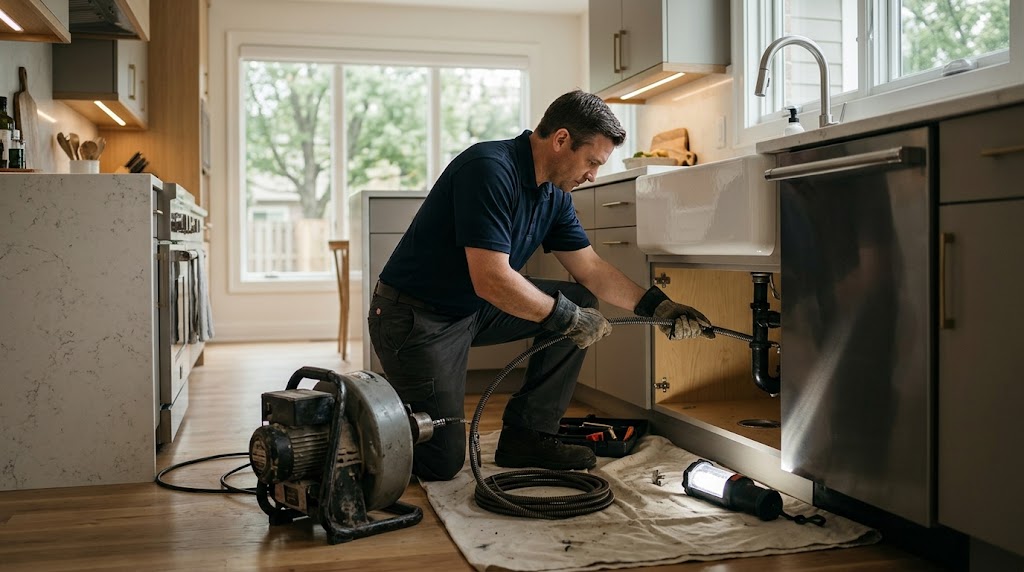
Underground sewer repairs designed to handle frost heave and ground settlement. Trenchless pipe lining and traditional excavation for damaged residential mains.
Learn More →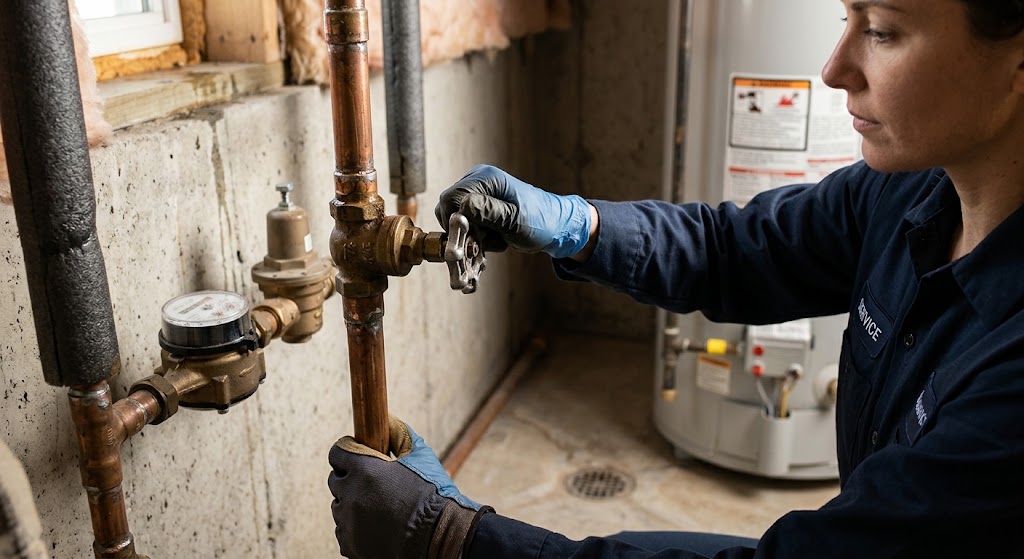
Specialized service for Mat-Su Valley and Kenai Peninsula private well systems. Submersible pump diagnostic, pressure switch adjustment, and cold-weather tank insulation.
Learn More →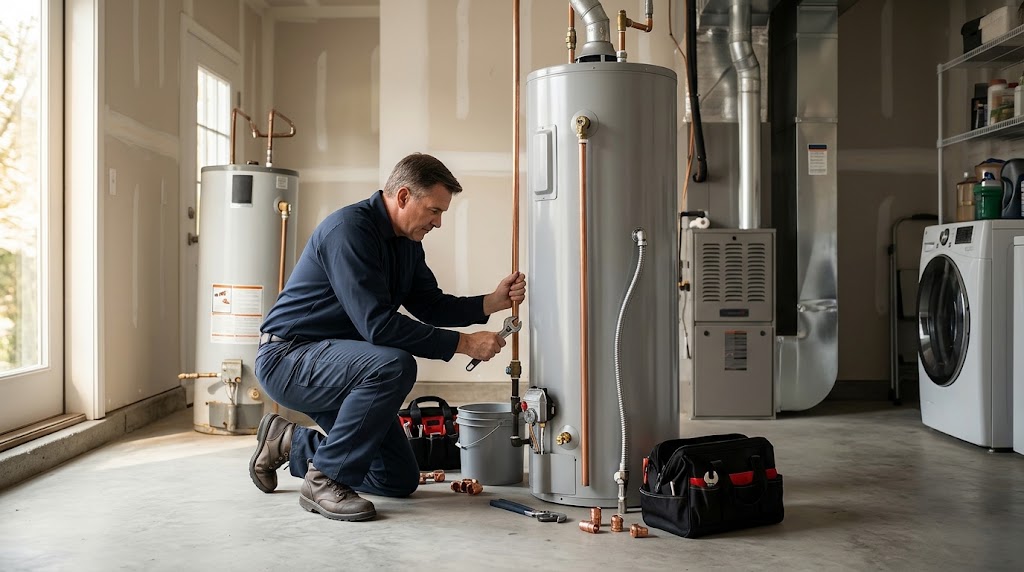
In Alaska, plumbing and home heating are closely intertwined. Technicians service boiler circulation loops, zone valves, expansion tanks, and glycol-filled hydronic pipes.
Learn More →Alaska presents severe plumbing conditions found nowhere else in North America. When ambient temperatures plummet past −40°F in the Interior, or 50 mph glacial gales sweep down the Matanuska Valley, residential and commercial plumbing systems endure punishing thermal strain. Ground frost routinely penetrates 5 to 10 feet into the earth, challenging water mains, sewer laterals, and private well supply lines with unrelenting ground heave.
Standard lower-48 plumbing assumptions fail in the Last Frontier. Water entering Alaskan homes directly from glacial aquifers or municipal reservoirs often registers between 34°F and 38°F — barely hovering above freezing point. To deliver a safe, comfortable domestic hot water supply, water heaters and hydronic combi-boilers must perform an extreme 80°F to 90°F thermal rise under constant duty cycles.
When sub-zero air infiltrates rim joists, crawlspaces, or unheated garages, exposed copper and PEX pipes can freeze solid in as little as two hours. The resulting expansion produces hydrostatic pressures exceeding 2,000 to 3,000 PSI, shattering brass valves and splitting pipe walls longitudinally. Resolving these catastrophic situations requires specialized arctic thawing technology, high-output steam systems, and experienced Alaskan tradespeople who understand the fragile balance between freeze protection and structural safety.
Plumbers in Alaska operates as a dedicated statewide telephone dispatch and referral network. We bridge the gap between distressed property owners and independent, licensed plumbing contractors equipped to handle extreme sub-zero emergencies across 10 vital Alaskan communities.
Understanding why standard construction standards fall short in Alaska and how Arctic-grade plumbing engineering protects your home.
| Plumbing Parameter | Lower-48 Standard Practice | Alaska Arctic Specification | Consequence of Inadequate Engineering |
|---|---|---|---|
| Burial Depth & Frost Line | 18 to 36 inches below grade | 5 to 10+ feet (or above-ground utilidor with continuous heat trace) | Frozen Water Mains Ground freeze crushes shallow pipes, severing water supply for weeks. |
| Incoming Water Temperature | 50°F to 65°F average intake | 34°F to 38°F (near-freezing glacial well water) | Severe Capacity Drop Standard water heaters lose 40% to 60% of their rated hot water flow output. |
| Pipe Thawing Methodology | Hairdryers or gentle ambient warming | High-amperage electro-thermal resistance units & pressurized steam jetting | Explosion & Fire Open torches ignite wall framing; uneven heat creates violent steam rupture. |
| Supply Pipe Materials | Rigid copper type M or standard CPVC | PEX-A (cross-linked polyethylene with expansion memory) & heavy-wall type K/L copper | Longitudinal Bursting Rigid plastic and thin-wall copper rupture instantly upon freezing. |
| Sewer Vent Stack Defense | Standard roof penetration pipe flashing | Insulated roof jackets, heat trace collars, or subterranean mechanical air admittance valves | Methane Inversion Hoarfrost caps the vent stack, forcing sewer gas and toxic fumes back into living spaces. |
| Heating Integration | Independent forced-air gas furnaces | Hydronic boilers with closed-loop 50/50 propylene glycol freeze protection | Whole-Home Freezing Heating pipe freeze during a power outage causes secondary catastrophic water line ruptures. |
A burst pipe in an Alaskan home is never a minor inconvenience — it is a structural emergency with compounding financial risk. When a 3/4-inch pressurized water line splits, it discharges between 400 and 600 gallons of near-freezing water per hour directly into your wall cavities, ceilings, and crawlspaces.
In sub-zero temperatures, water cascading into a home does not merely saturate carpet and drywall — it freezes into thick sheets of interior ice. This ruins subflooring, expands into timber framing, shorts electrical panels, and creates ideal microclimates for toxic mold growth as soon as indoor heating is restored.
When a plumbing crisis hits your home, you need clarity, fast communication, and decisive action without guesswork.
Dial (888) 205-7875. You are connected directly with our intake coordination team. We establish your exact Alaska city, borough district, and the severity of the failure.
Our team guides you over the phone on immediate damage containment: locating main water valves, shutting off well pump breakers, and safely isolating electrical zones.
Your call is routed immediately to an available, independent local contractor equipped with commercial steam thawers, sewer jetters, or water heater inventory for your region.
The technician arrives on site, performs diagnostic evaluations, provides transparent repair recommendations, and completes professional repairs built to withstand Alaska winters.
Because Alaska spans multiple distinct climate zones, plumbing needs vary significantly between regions. Our network serves all four primary zones.
Southcentral combines coastal maritime weather with sudden mountain chill. High seismic activity causes frequent underground pipe shifts and sheared sewer laterals.
Interior Alaska experiences brutal sub-arctic continental winters with temperatures routinely dropping to −40°F to −50°F. Frost penetrates 8 to 10 feet into the ground.
Southeast Alaska receives between 60 and 150 inches of rainfall annually. High water tables, coastal humidity, and bedrock runoff create intense hydrostatic flooding pressure.
Kenai Peninsula blends coastal wind with deep inland cold. Private well water with high tannin and mineral content accelerates hot water equipment degradation.
Stay ahead of sub-zero temperatures and spring breakup by following this proactive quarterly schedule.
Alaska plumbing service involves specialized logistical realities. Here is how local contractors calculate fair, transparent pricing.
Commercial-grade 400-amp electro-thermal thawers, high-pressure hot water jetters with heated water tanks, and thermal imaging cameras require massive capital investment and heavy winter maintenance.
Plumbing replacement valves, brass fittings, submersible well pumps, and commercial combi-boiler parts must be airfreighted or barged to Alaska, making fully stocked service trucks essential for immediate one-trip repairs.
Working in −20°F crawlspaces, icy roofs, or frozen trenches demands specialized protective gear, safety protocols, and rotation. After-hours, weekend, and holiday emergency dispatches reflect these labor conditions.
Call our dispatch team at (888) 205-7875 to connect directly with an active contractor who can evaluate your symptoms, explain local diagnostic rates, and provide an upfront quote before starting work.
Call (888) 205-7875 Now →When you request service through Plumbers in Alaska, your call is connected to experienced local professionals who meet rigorous operational criteria.
Participating contractors must hold active Alaska business and specialty plumbing licensing, ensuring all work meets local municipal building and plumbing codes.
Technicians carry comprehensive commercial general liability insurance, providing property owners total peace of mind against unforeseen structural damages.
Trucks are fully stocked with arctic-rated pipe thawing rigs, high-pressure jetters, inspection cameras, and high-recovery replacement heating elements.
Common inquiries from Alaska homeowners about local plumbing, emergency response, and dispatch procedures.
Plumbers in Alaska operates as a statewide advertising and telephone referral platform. When you dial (888) 205-7875, our dispatch system connects you directly with independent, licensed plumbing service providers based in your local Alaska community. There are no online form waiting periods or generic chatbots — you speak directly with a coordinator who assesses your needs and connects you to an available technician.
Never use an open flame torch to thaw frozen pipes. Open flames are the leading cause of catastrophic residential fires in Alaska during winter freeze snaps. Torches heat pipes unevenly, boiling trapped water inside sealed ice sections and generating violent steam explosions that can split pipes and ignite dry framing lumber. Professional plumbers use commercial electrical resistance thawers or pressurized hot water steam tubes that safely defrost lines from the inside out.
We connect callers with plumbing specialists across 10 primary Alaska communities: Anchorage, Eagle River, Wasilla, Palmer, Fairbanks, North Pole, Juneau, Kenai, Soldotna, and Ketchikan. Coverage extends to surrounding borough neighborhoods within participating contractor operational zones, including Birchwood, Chugiak, Meadow Lakes, Big Lake, Ester, Salcha, Douglas Island, Sterling, and Ward Cove.
Alaska water heaters face extreme operational demands. Incoming municipal and well water can be as cold as 34°F to 38°F in mid-winter, demanding an extreme 80°F+ temperature rise to produce 120°F tap water. This forces burner assemblies and heating elements to fire for prolonged durations. Additionally, groundwater in areas like the Mat-Su Valley and Kenai Peninsula carries dense dissolved calcium, magnesium, and iron minerals that precipitate into thick sediment blankets, causing tank overheating and element burnout within 4 to 6 years if not flushed regularly.
To ensure rapid dispatch with the proper equipment, please have: your exact street address and any driveway access issues (such as steep ice or unplowed snow), whether your property is on city water/sewer or private well/septic, the exact symptoms (active spraying water, total loss of flow, drain gurgling, or water heater pooling), whether you have successfully turned off the main shutoff valve, and the current indoor heating status.
During severe sub-zero cold snaps or sudden freeze-thaw cycles, demand for emergency plumbing spikes statewide. By calling our central dispatch line at (888) 205-7875, your request is immediately triaged and routed to the nearest contractor with open emergency availability. Technicians prioritize life-safety situations — such as active flooding near electrical panels or total loss of heating loop pressure — and provide direct arrival estimates based on current road conditions.