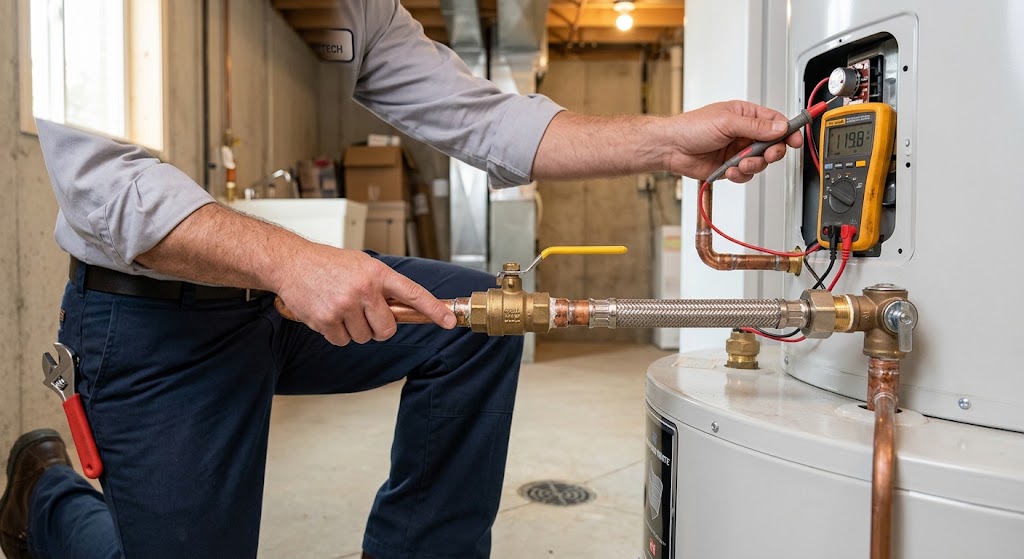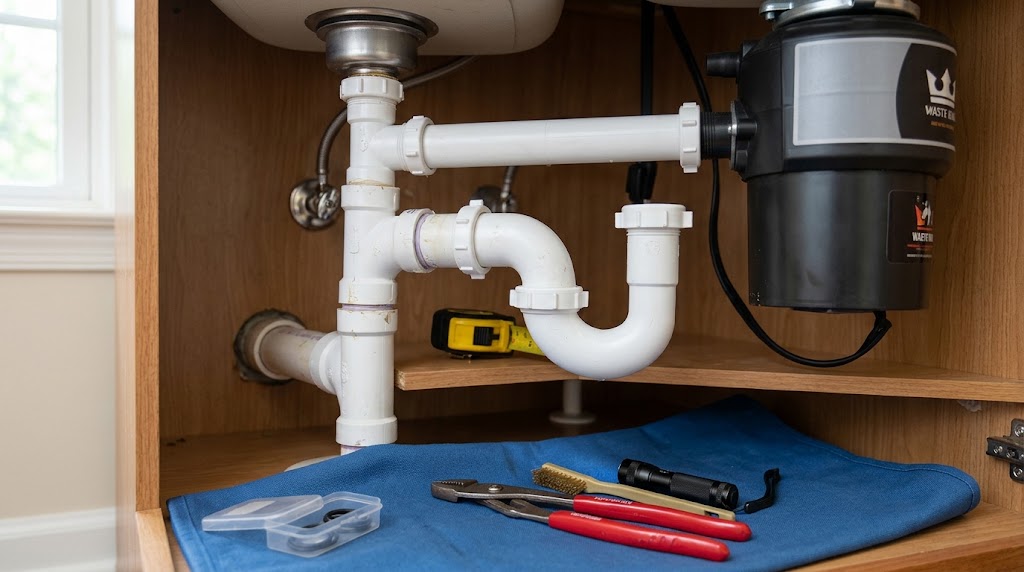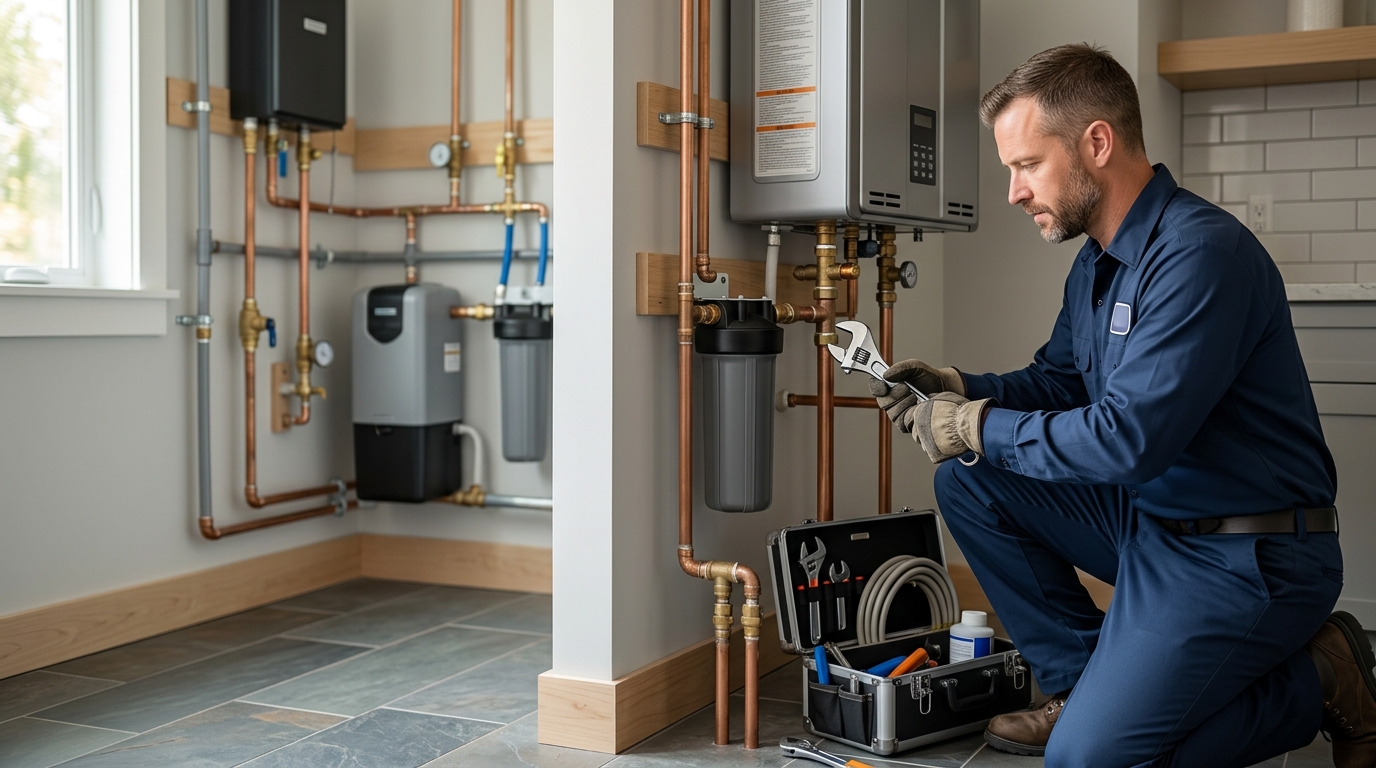
Local Plumbing Solutions for Homes and Businesses — rapid dispatch for frozen pipe thawing, boiler heating repairs, water heaters, and emergency sewer clearing across Eagle River.
Nestled in the Chugach Valley, Eagle River experiences severe temperature inversions where cold air pools at low elevation, causing temperatures to plunge 10 to 15 degrees colder than downtown Anchorage.
Eagle River sits on glacial till and mountain bedrock along the Eagle River drainage. Deep mountain frost, heavy snow accumulations, and rocky, non-porous soils create steep hydraulic runoff during spring breakup and deep frost penetration in early winter.
Lower elevation Eagle River subdivisions connect to AWWU water and sewer services, while higher elevation properties in Eagle River Valley, Hiland Road, and Birchwood depend on deep bedrock private wells. These wells often exceed 200 to 450 feet in depth, requiring heavy-duty 240V multi-stage submersible pumps.
Eagle River properties frequently feature split-level and daylight-basement architecture with unheated multi-car garages located directly underneath master bathrooms, making floor joist piping acutely vulnerable to valley wind-chill.
Independent contractors in our network provide comprehensive residential and commercial services tailored to local infrastructure.
Transparent rate factors for residential and commercial plumbing service calls throughout Eagle River and Municipality of Anchorage.
Technicians based in Eagle River service both core urban streets and outlying rural districts. Standard diagnostic fees cover initial on-site evaluation, system testing, and itemized repair estimates.
Commercial-grade electrical pipe thawers, hot-water jetting trailers, and fiber-optic sewer cameras are standard on local trucks to handle Eagle River's extreme winter soil conditions.
Repairs incorporate PEX-A expansion piping, commercial self-regulating heat trace cables, brass isolation valves, and heavy-duty insulation built to survive sub-zero cycles.
Stay ahead of severe freeze-thaw cycles and spring ground saturation across Municipality of Anchorage.
Plumbing requirements in Eagle River vary significantly between single-family residences, multi-family housing complexes, and commercial facilities. Commercial buildings — including restaurants, medical clinics, retail centers, and industrial facilities throughout Municipality of Anchorage — face rigorous backflow prevention mandates, high-capacity grease interceptor servicing, and high-demand commercial hot water loop maintenance.
For residential property owners, focus centers on crawlspace insulation, freeze-resistant piping retrofits, and reliable domestic hot water generation. Participating technicians in our referral network possess the commercial equipment and credentialed experience required to service both high-capacity commercial boilers and sensitive residential water systems.
In Eagle River, attempting amateur plumbing fixes during freezing weather frequently escalates a manageable repair into a structural catastrophe. Standard push-fit plastic fittings or amateur soldering in sub-zero wall cavities can fail under thermal contraction, discharging hundreds of gallons of water into insulation and floor joists.
Independent plumbing contractors in our network utilize arctic-proven PEX-A expansion systems, commercial brass compression valves, and heavy-duty closed-cell pipe insulation. By connecting through our central telephone dispatch line at (888) 205-7875, you ensure your Eagle River home or commercial building receives code-compliant workmanship engineered to withstand decades of Alaskan freeze-thaw cycles.
Common inquiries from Eagle River residents regarding winter plumbing, well maintenance, and emergency response.
Many homes in Eagle River have bathrooms or master bedrooms situated directly above unheated or partially heated two-car garages. When sub-zero valley inversions occur, draft infiltration freezes the supply lines running between floor joists within hours.
Yes. When boiler systems run continuously during cold snaps, pressure fluctuations and minor leaks in zone valves can draw micro-bubbles into hydronic baseboard loops, stopping heat circulation to upper floors until professionally purged.
Check the 240V well pump dual-pole circuit breaker and inspect your pressure tank gauge. If the gauge reads zero and the pump control box capacitor is humming, contact dispatch at (888) 205-7875 immediately to prevent motor burnout.
Technicians locate the freeze point using acoustic listening tools and thermal cameras. Controlled warm airflow or non-invasive electro-thermal heating is applied safely to restore flow without cutting extensive holes through garage fire-rated drywall.
Moist warm sewer air rising through roof vents rapidly condenses and turns into hoarfrost when meeting -20°F valley air. A capped vent causes fixtures to drain slowly and pulls sewer odors into living areas.