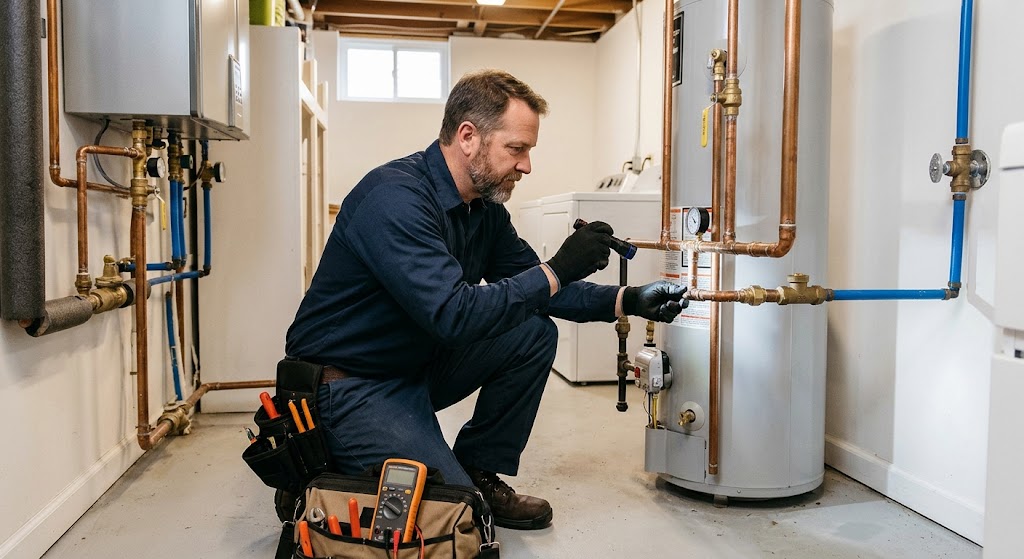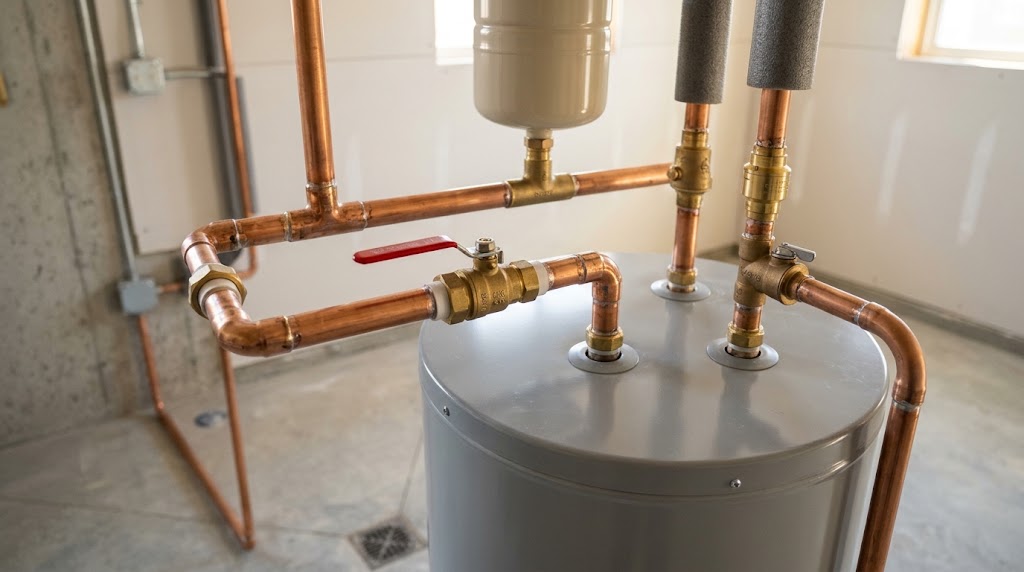
Fast, Professional Help When You Need It Most — specialized equipment and arctic-proven techniques to restore your plumbing quickly and safely.
Juneau receives between 60 and 90 inches of annual precipitation. Heavy autumn atmospheric rivers and spring mountain snowmelt create massive hydrostatic pressure against home foundations. A functioning sump pump system is critical to prevent catastrophic crawlspace flooding.
Juneau coastal power grids frequently experience outages during violent wind and rain storms. A primary pump without a dedicated battery backup leaves homes defenseless when flood risk is at its absolute highest.
Basin & Float Switch Inspection: Clearing debris, testing check valve seals, and checking electrical supply.
Discharge Line Testing: Inspecting exterior discharge piping for ice dams, gradient sag, or coastal debris blockages.
Submersible Replacement & Dual Battery Backup: Installing cast-iron submersible pumps paired with secondary battery-powered emergency pumps for power outages.
Understanding the equipment, capabilities, and safety factors involved in professional sump pump repair & basement groundwater services in Juneau.
| Pump Technology | Power Requirement | Discharge Volume (GPH) | Storm Outage Reliability |
|---|---|---|---|
| Cast-Iron Primary Submersible | Standard 120V household AC | 3,000 to 4,500 GPH at 10ft head | Inoperative during power failure without generator |
| Smart Dual-Battery Backup | 12V Marine Deep-Cycle Battery | 2,000 to 2,800 GPH continuous | High (automatically takes over for 24-48 hours of pumping) |
| Municipal Water-Powered Siphon | City water line pressure (no power needed) | 1,000 to 1,500 GPH | Maximum (runs indefinitely as long as city water pressure remains active) |
How professional contractors determine fair, upfront estimates for Juneau properties.
Evaluating crawlspace clearance, mechanical room layout, and isolation valve accessibility to safely stage commercial equipment without damaging finishes.
Commercial-grade tooling — including high-amperage thawers, fiber-optic color cameras, and hydro-jetters — involves specialized operation by trained technicians.
All replacement valves, piping, expansion bladders, and heating elements are specifically rated for Alaska sub-zero temperature swings and mineral water conditions.
Every service dispatch follows a rigorous 4-stage engineering protocol designed for Alaska mechanical resilience.
Technicians measure groundwater inflow rates into the sump basin during Southeast Alaska rain events to calculate exact gallons-per-hour (GPH) requirements at standard 10-foot total dynamic head.
Float switch mechanical travel, tether length, and internal micro-switch continuity are rigorously tested. Technicians ensure the float moves freely without catching on discharge pipes or basin walls.
The vertical spring-loaded check valve is inspected to prevent discharged water from slamming backward into the basin. Technicians trace the exterior discharge line to verify proper drainage away from foundations.
Technicians simulate full electrical grid failure to verify that the auxiliary 12V marine deep-cycle battery backup pump engages instantaneously and maintains positive pressure output under load.
In extreme sub-zero environments, guesswork leads to catastrophic plumbing damage. Applying open heat guns or incorrect electrical grounding can ignite concealed framing or shatter frozen ceramic fittings. Our vetted Juneau plumbing contractors follow strict acoustic, thermal, and hydrostatic verification sequences before, during, and after every mechanical repair to ensure zero structural risk.
Proactive steps property owners can take to prevent emergency failures and extend equipment operating life.
Pour a 5-gallon bucket of water directly into the sump pit once a month. The primary pump should trigger smoothly when the float rises 4 to 6 inches and empty the basin in approximately 10 to 15 seconds.
During Juneau winter cold spells, exterior discharge pipe openings can freeze shut with ice. Install an anti-freeze freeze relief escape hood to provide an alternative discharge path if the main outlet freezes.
Silt and glacial gravel carried by groundwater settle at the bottom of the basin. Scoop out accumulated gravel annually to prevent particulate matter from grinding down pump impellers.
Inspect backup battery terminals for white lead-sulfate corrosion every six months. Replace deep-cycle marine batteries every 3 to 4 years to guarantee flood defense during severe coastal storms.
What homeowners should expect when connecting with professional plumbing contractors in Juneau.
Technicians install professional-grade cast-iron submersible pumps with non-clogging vortex impellers capable of passing solids, unlike fragile plastic hardware store models.
Every sump pump service includes installation or testing of audible high-water alarms and smart cellular alert sensors that warn homeowners before water breaches crawlspace levels.
Contractors specialize in engineered dual-pump configurations featuring primary AC pumping paired with secondary DC emergency backups for total peace of mind in rain-soaked Juneau.
Answers to important questions about sump pump repair & basement groundwater services in Juneau, Alaska.
Atmospheric rain storms that overwhelm home foundations often coincide with high wind gusts that take down power lines. A 12V battery backup system automatically activates when power fails, providing hours of continuous pumping.
Discharge lines should exit at least 10 to 20 feet away from the foundation on a downward slope to prevent pumped water from re-infiltrating your crawlspace. Lines must be protected against winter freeze-up at the exit point.
A failing check valve allows discharged water in the vertical pipe to rush back into the basin when the pump stops, causing the pump to cycle on and off every 30 seconds until the motor burns out.
Iron bacteria produces a thick orange gelatinous sludge that coats float switches and clogs pump intake screens, requiring periodic chemical cleaning and basin flushing.
Due to the exceptionally high water tables in the Mendenhall Valley, technicians typically recommend at least a 1/2 HP or 3/4 HP cast-iron commercial-grade submersible unit.