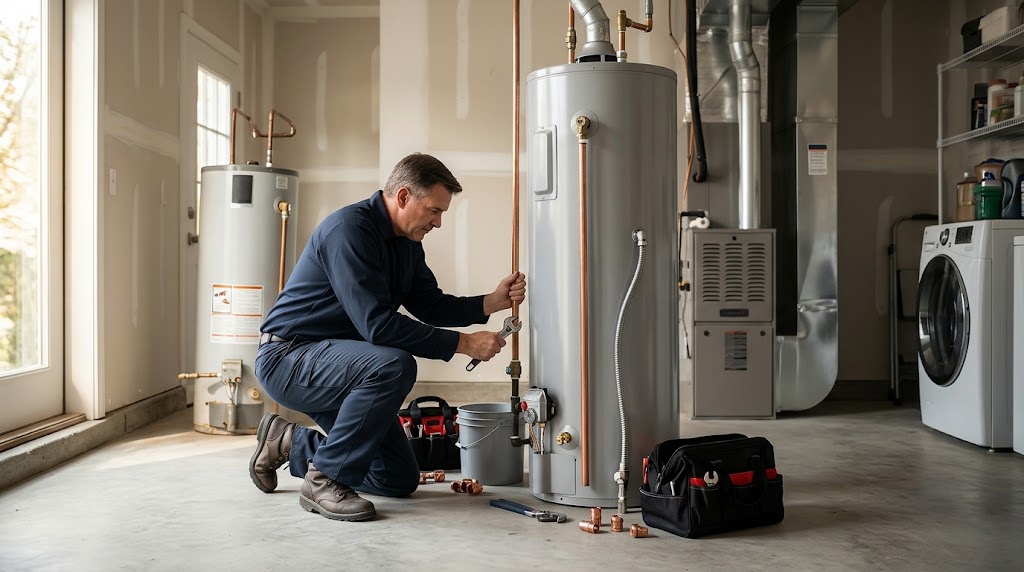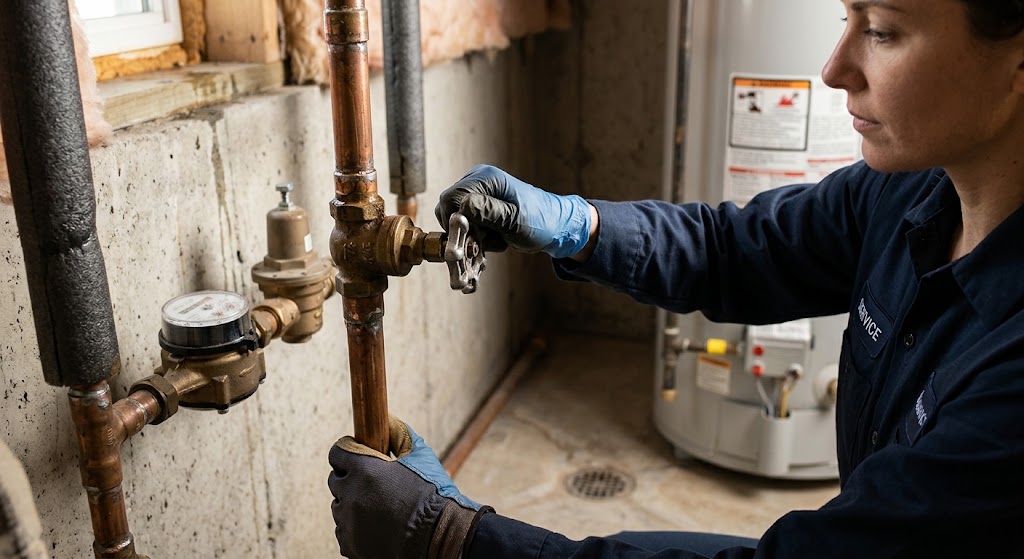
Fast, Professional Help When You Need It Most — specialized equipment and arctic-proven techniques to restore your plumbing quickly and safely.
Most homes throughout Wasilla and the Matanuska-Susitna Borough rely on private deep groundwater wells. When your well pump fails, water pressure drops to zero. Local specialists diagnose submersible pumps, pressure switch contacts, and bladder tanks to restore water quickly.
Wasilla glacial till soils and heavy Matanuska winds expose wellhead sanitary seals and above-ground pressure pipes to severe wind-chill freezing. Adequate heat tracing and insulated pitless adapters are crucial.
Electrical & Switch Inspection: Testing 240V supply, control box start capacitors, and checking for iced or pitted pressure switch contacts.
Pressure Tank Diagnostics: Checking tank pre-charge air pressure and testing internal rubber bladders for rupture or water-logging.
Down-Hole Submersible Pump Replacement: If the pump motor is burned out, technicians pull the drop pipe, install an arctic-rated submersible unit, and verify flow rate.
Understanding the equipment, capabilities, and safety factors involved in professional well pump & pressure tank repair in Wasilla.
| System Component | Typical Life Expectancy | Common Failure Mode | Alaska Cold-Weather Solution |
|---|---|---|---|
| Submersible Pump | 10 to 15 years | Motor winding burnout / lightning surge | Deep-set multi-stage pump with built-in surge arrestor. |
| Pressure Switch | 4 to 7 years | Pitted electrical contacts / frost lock | Sealed low-pressure cut-off switch with insulated enclosure. |
| Bladder Pressure Tank | 6 to 10 years | Internal butyl rubber diaphragm rupture | Heavy-gauge steel captive air tank sized for 1-minute run cycles. |
| Pitless Adapter Lead | 15+ years | Freeze-up above frost line from wind draft | Insulated casing riser with thermostatically controlled heat trace. |
How professional contractors determine fair, upfront estimates for Wasilla properties.
Evaluating crawlspace clearance, mechanical room layout, and isolation valve accessibility to safely stage commercial equipment without damaging finishes.
Commercial-grade tooling — including high-amperage thawers, fiber-optic color cameras, and hydro-jetters — involves specialized operation by trained technicians.
All replacement valves, piping, expansion bladders, and heating elements are specifically rated for Alaska sub-zero temperature swings and mineral water conditions.
Every service dispatch follows a rigorous 4-stage engineering protocol designed for Alaska mechanical resilience.
Technicians test line voltage (240V), control box start/run capacitors, potential relays, and measure motor winding resistance (ohms) to determine if a failure is electrical or down in the well.
Inspect mechanical contacts for electrical pitting, carbon buildup, or freezing moisture. The technician calibrates the differential spring nuts to achieve a crisp 30/50 or 40/60 PSI cut-in and cut-out sequence.
The captive air chamber is depressurized and tested with a digital tire gauge. Technicians inspect the heavy-duty butyl rubber diaphragm for internal tears, water-logging, and structural tank shell corrosion.
Technicians perform flow-rate metering at the manifold to measure gallons per minute (GPM), verifying down-hole pump performance against manufacturer pump curves and ensuring the well is not drawing sand.
In extreme sub-zero environments, guesswork leads to catastrophic plumbing damage. Applying open heat guns or incorrect electrical grounding can ignite concealed framing or shatter frozen ceramic fittings. Our vetted Wasilla plumbing contractors follow strict acoustic, thermal, and hydrostatic verification sequences before, during, and after every mechanical repair to ensure zero structural risk.
Proactive steps property owners can take to prevent emergency failures and extend equipment operating life.
Mat-Su winds frequently plunge wind chill to -40°F, freezing pitless adapters. Install an insulated, vented wellhead cover and verify that self-regulating heat trace tape along the riser pipe is fully operational.
Upgrade standard pressure switches to models with an integrated manual low-water cut-off lever. If a line freezes or well water drops, the switch automatically locks open, preventing catastrophic pump motor dry-burnout.
Wasilla's glacial till can introduce fine silt into private well lines. Replace whole-house sediment filter cartridges every 3 to 6 months to prevent particulate matter from clogging pressure switch sensing ports.
Check the air cushion pressure in your bladder tank every autumn when the system is drained of water pressure. The pre-charge air pressure should always be set exactly 2 PSI below the pump cut-in pressure.
What homeowners should expect when connecting with professional plumbing contractors in Wasilla.
Contractors utilize professional hydraulic pump-pulling machines mounted on service trucks, allowing safe, efficient extraction of deep drop pipes without damaging wellhead casings.
All replacement well components, sanitary seals, torque arrestors, and pitless adapters comply with Alaska Department of Environmental Conservation (ADEC) private water well standards.
Technicians provide clear, documented flow-rate (GPM) and electrical motor draw data before and after every repair, giving homeowners full transparency and peace of mind.
Answers to important questions about well pump & pressure tank repair in Wasilla, Alaska.
Short-cycling is almost always caused by a water-logged pressure tank. When the internal rubber bladder ruptures, water occupies the air cushion, causing system pressure to spike and plummet instantaneously with every faucet turn.
Wells across the Mat-Su Valley typically range from 60 to over 250 feet deep, drawing from deep glacial gravel aquifers that provide pristine water but require robust submersible pump systems.
Shut off the well pump double-pole breaker immediately. A buzzing control box indicates a failed start capacitor or relay, which will quickly overheat and destroy the expensive down-hole pump motor.
High-velocity sub-zero winds force freezing air into uninsulated well casing heads, freezing the mechanical pressure switch contacts open and preventing the electrical circuit from closing.
While Mat-Su aquifers are generally abundant, winter freeze-ups in intake lines or heavy simultaneous irrigation can temporarily drop water tables. Installing a pump protector with low-water cutoff prevents dry-run burnout.