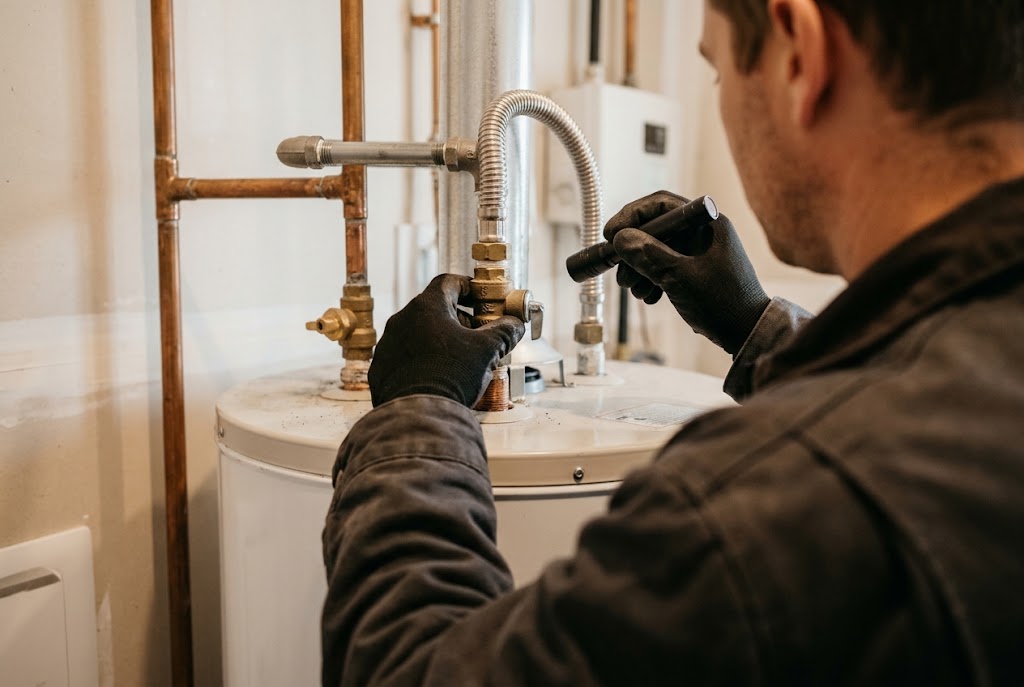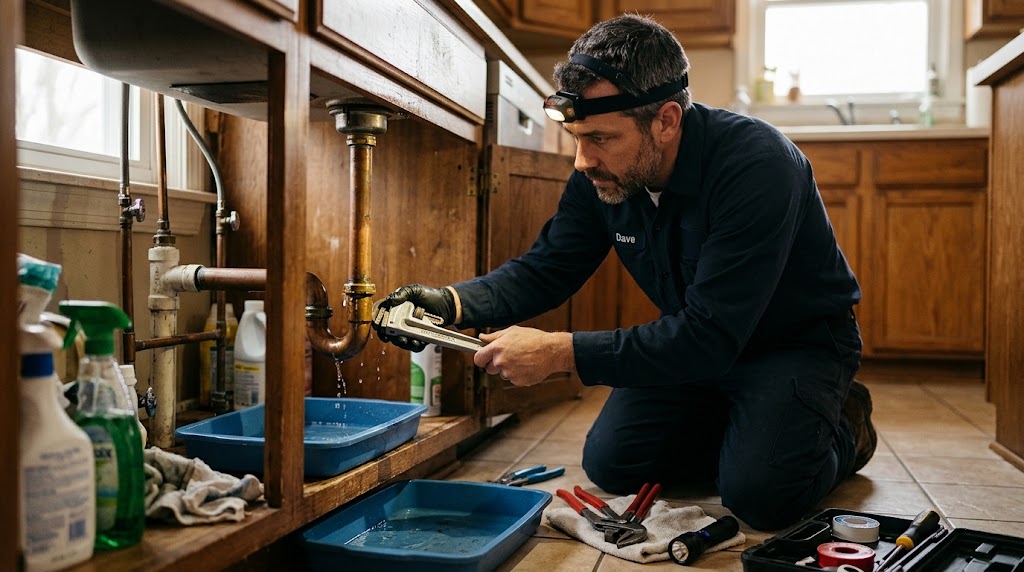
Fast, Professional Help When You Need It Most — specialized equipment and arctic-proven techniques to restore your plumbing quickly and safely.
In Wasilla, incoming winter well water can be as cold as 36°F. To provide a comfortable 120°F shower, your water heater must achieve an extreme 84°F temperature rise. Heavy mineral hardness in Mat-Su groundwater accelerates scale buildup, making professional maintenance essential.
Wasilla groundwater contains high concentrations of calcium and iron. Without periodic flushing and water softener integration, lower elements burn out in electric tanks within 2 to 4 years.
Thermal & Component Testing: Testing heating elements, thermostats, gas control valves, and thermocouple sensors.
Sediment Flush & Anode Rod Inspection: Flushing heavy mineral deposits from the tank bottom and replacing depleted sacrificial anode rods.
Replacement & Sizing: Installing high-efficiency gas, hybrid heat pump, or tankless water heaters properly sized for cold northern water supplies.
Understanding the equipment, capabilities, and safety factors involved in professional water heater repair & replacement in Wasilla.
| Water Heater Type | Winter Alaska Flow Output | Mineral Hardness Tolerance | Energy Efficiency Rating |
|---|---|---|---|
| Standard Electric Tank | 50 to 80 gallons stored | Moderate (requires frequent element replacement) | Standard EF 0.92 (high electric draw in winter) |
| Atmospheric / Power-Vent Gas | High recovery rate (40+ GPH) | Good (sediment flush required annually) | High EF 0.67 to 0.72 (natural gas or propane) |
| Tankless On-Demand | 3.5 to 4.5 GPM in winter | Low (requires annual vinegar/chemical flush) | Ultra-High EF 0.95+ (condensing technology) |
| Boiler Indirect Water Tank | Virtually unlimited hot water | Excellent (smooth stainless steel coil) | Maximized (shares high-efficiency boiler heat) |
How professional contractors determine fair, upfront estimates for Wasilla properties.
Evaluating crawlspace clearance, mechanical room layout, and isolation valve accessibility to safely stage commercial equipment without damaging finishes.
Commercial-grade tooling — including high-amperage thawers, fiber-optic color cameras, and hydro-jetters — involves specialized operation by trained technicians.
All replacement valves, piping, expansion bladders, and heating elements are specifically rated for Alaska sub-zero temperature swings and mineral water conditions.
Every service dispatch follows a rigorous 4-stage engineering protocol designed for Alaska mechanical resilience.
Technicians measure resistance across upper and lower 4500W electric heating elements with digital multimeters. In gas units, technicians test thermocouple millivolts, thermopile output, and electronic gas control valve solenoids.
Wasilla's mineral-rich groundwater bakes into calcium carbonate crust at the bottom of heating tanks. Technicians gauge sediment buildup that insulates elements, causes boiling kettling sounds, and overheats tank bottoms.
Removing the hex-head anode rod allows technicians to measure core degradation. In high-mineral Mat-Su well water, depleted anode rods allow aggressive galvanic corrosion to attack the steel tank lining directly.
Technicians verify the Temperature and Pressure (T&P) safety valve seat, ensuring the emergency 150 PSI / 210°F discharge mechanism operates freely and that the thermal expansion tank is properly pressurized.
In extreme sub-zero environments, guesswork leads to catastrophic plumbing damage. Applying open heat guns or incorrect electrical grounding can ignite concealed framing or shatter frozen ceramic fittings. Our vetted Wasilla plumbing contractors follow strict acoustic, thermal, and hydrostatic verification sequences before, during, and after every mechanical repair to ensure zero structural risk.
Proactive steps property owners can take to prevent emergency failures and extend equipment operating life.
Connect a garden hose to the bottom brass boiler drain valve twice a year and flush 5 to 10 gallons of water into a floor drain to wash away loose sand and calcium flakes before they harden into a calcified cake.
Upgrade conventional magnesium anode rods to powered titanium rods. This permanently protects steel tank walls against corrosion without reacting with sulfur-reducing bacteria that produce rotten-egg odors.
Maintain water heater storage temperature at exactly 120°F. Settings above 130°F drastically accelerate mineral scale precipitation in Mat-Su water and increase the risk of accidental scalding.
Wrap exposed cold supply piping with closed-cell foam insulation and heat tape where lines pass through unheated garages or cold utility rooms to preserve incoming thermal energy.
What homeowners should expect when connecting with professional plumbing contractors in Wasilla.
Technicians calculate heating recovery based on real Alaska incoming water temps (36°F to 40°F) rather than Lower-48 standards (55°F to 65°F), ensuring your household never runs out of hot water.
All water heater installations include heavy-gauge galvanized steel seismic straps anchored directly into structural studs, satisfying Alaska seismic protection standards.
Full replacement services include safe disconnect, draining, environmentally responsible recycling of the old unit, and installation of a code-compliant drip pan with exterior discharge line.
Answers to important questions about water heater repair & replacement in Wasilla, Alaska.
Yes, but they must be sized correctly for Alaska groundwater. A unit rated for 9 GPM in Florida may only produce 3.5 to 4.5 GPM in Wasilla due to the steep 80°F+ temperature rise required during winter months.
That sound is caused by mineral scale trapping steam bubbles at the bottom of the tank. As the bubbles violently burst through the hard mineral crust, it creates a distinct popping or banging sound.
Sulfur smells occur when anaerobic bacteria react with magnesium anode rods in high-sulfate well water. Replacing the standard rod with a powered titanium or aluminum-zinc anode eliminates the odor.
Because of Wasilla's high mineral content, tanks should be drained and flushed every 6 to 12 months to remove sediment before it bakes into a rock-hard layer that ruins heating elements.
Shut off the cold water supply valve on top of the tank and switch off the electrical breaker (or turn gas valve to PILOT). A leaking tank base indicates internal tank rupture and requires full replacement.